Strengthening Private Sector Resilience to Disasters and Climate Risks in Sri Lanka
The Ceylon Chamber of Commerce, in partnership with the World Food Programme (WFP), implemented the project “Enhancing the Capabilities of the Private Sector on Disaster Risk Reduction, Disaster Management, and Climate Services.” Conducted from May 2024 to March 2025, with implementation extended to December 2025, the initiative aimed to strengthen private sector preparedness for disasters and climate-related risks across seven vulnerable districts – Kurunegala, Nuwara Eliya, Monaragala, Trincomalee, Vavuniya, Mannar, and Mullaitivu, with the endorsement of the Ministry of Disaster Management and the Disaster Management Centre.
Project Objectives
- Strengthen private-sector knowledge and capacities in disaster risk reduction, disaster management, and climate services.
- Support enterprises to develop practical Business Continuity Plans.
- Improve awareness of national disaster risk policies and institutional frameworks.
- Promote private sector-led innovation to strengthen disaster early warning systems.
Highlights of the Project
A nationwide capacity needs assessment identified gaps in disaster preparedness among MSMEs and large enterprises, with agriculture and micro and small enterprises identified as the most vulnerable.
A Business Continuity Management System (BCMS) manual and handbook were developed in Sinhala, Tamil, and English, aligned with international standards and adapted to the Sri Lankan context.
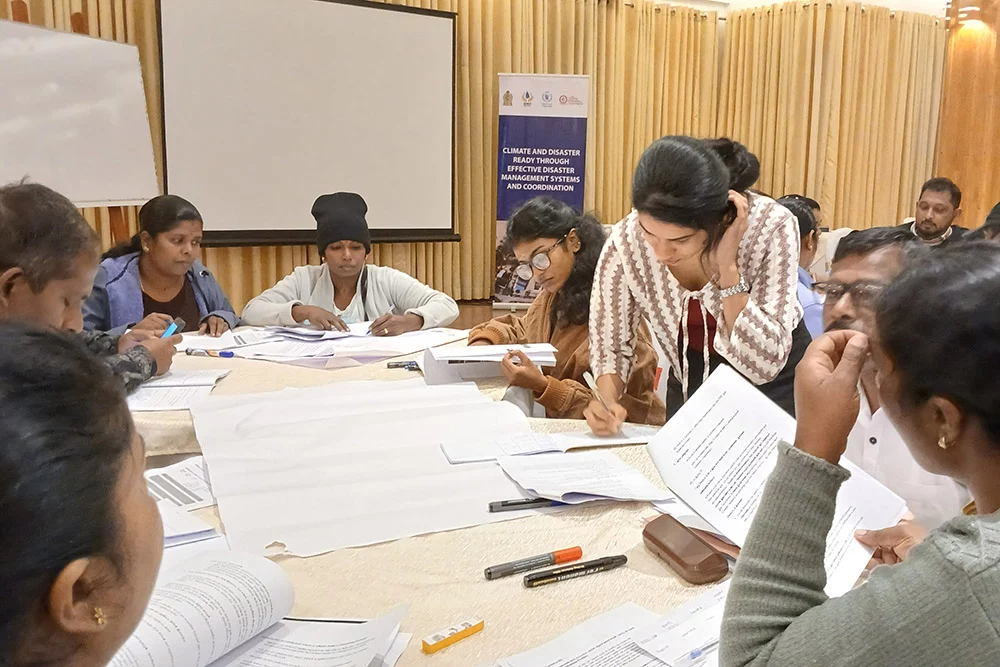
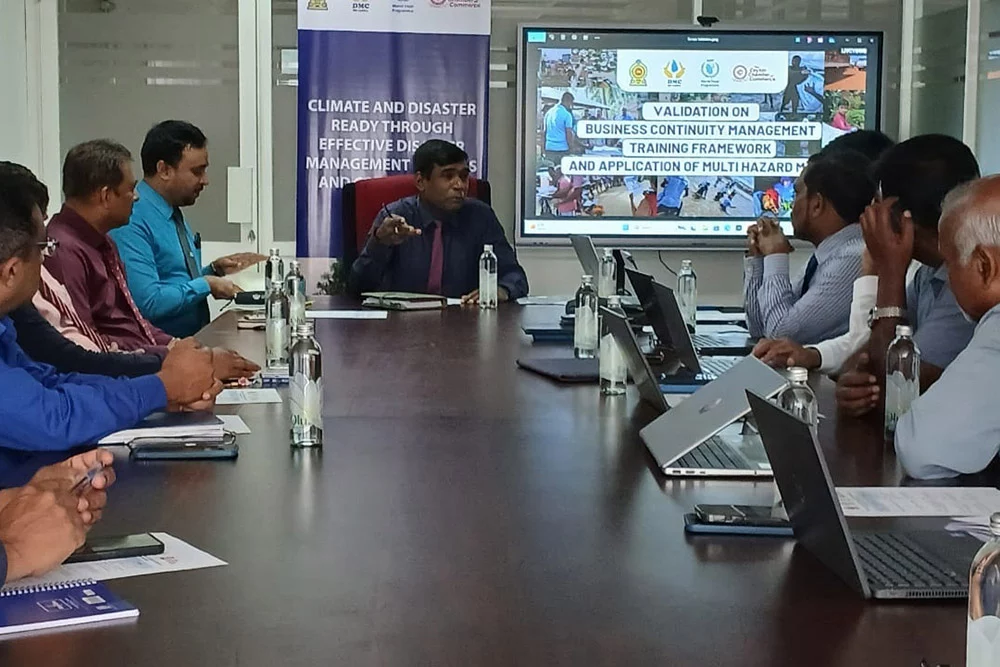
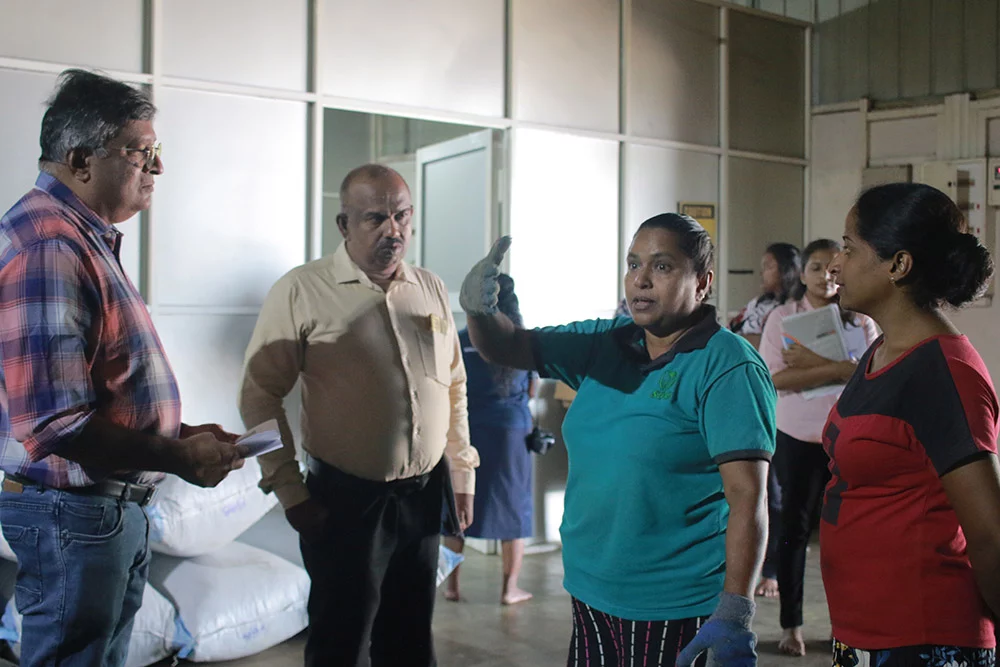
A multi-hazard mapping and Business Continuity Management training programme equipped SMEs and trainers with tools to assess risks and develop continuity plans, reaching over 570 participants and building a national pool of facilitators.
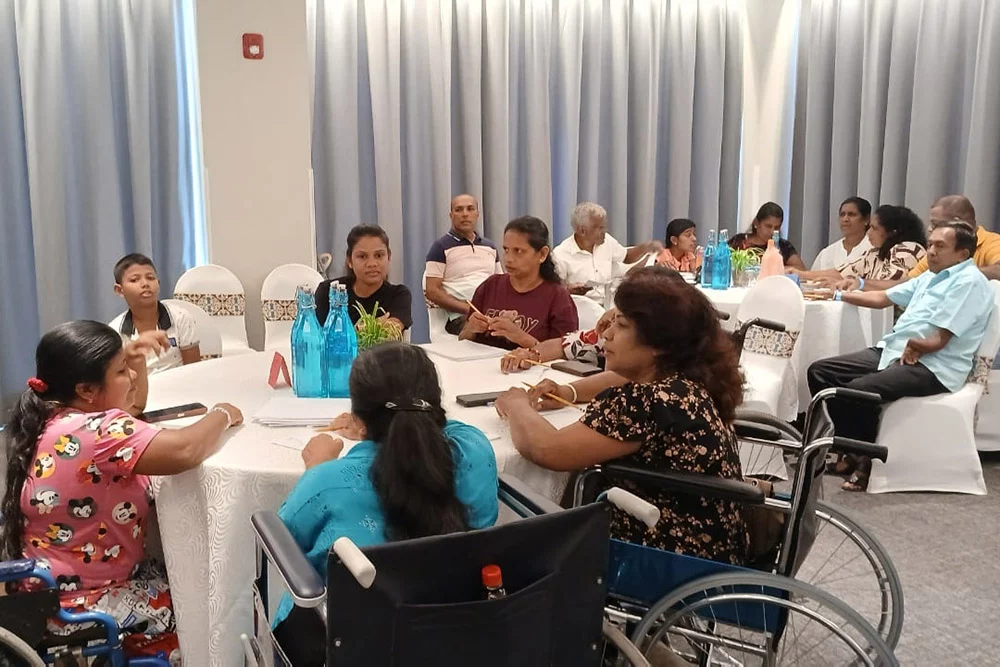
An inclusive national BCM Training of Trainers programme engaged differently-abled entrepreneurs, reinforcing the project’s commitment to inclusive capacity building.
Business Continuity Plans were developed across priority sectors, including apparel, plantations, agriculture, fisheries, and tourism, with simulation exercises conducted to test their effectiveness.
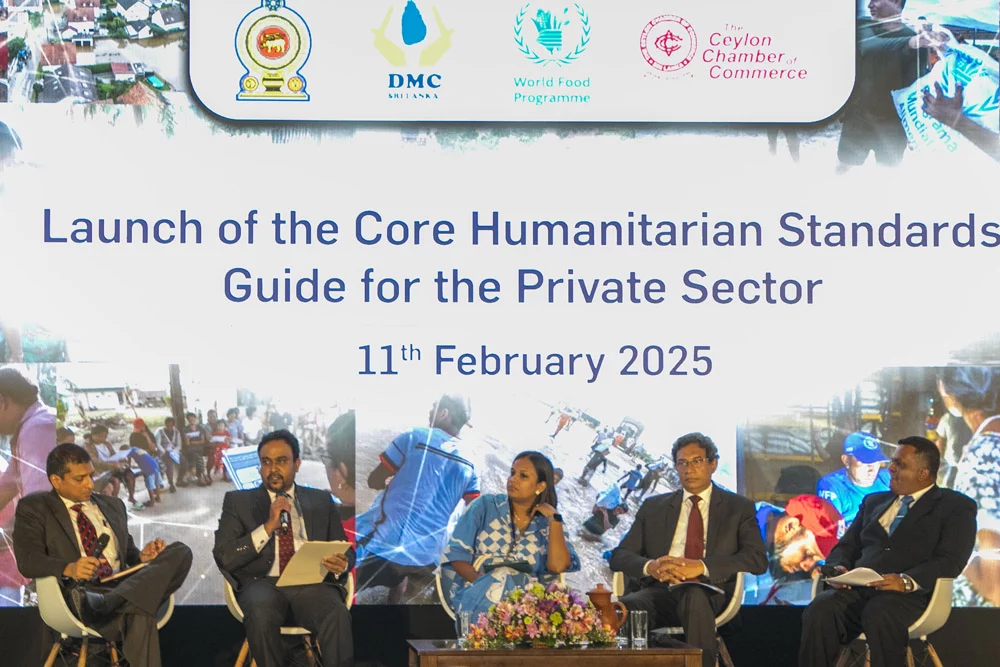
The Core Humanitarian Standards guidelines for the private sector were launched, providing businesses with practical guidance on disaster preparedness and continuity planning, and were made available in all three national languages. These guidelines are published on the Disaster Management Centre’s website.
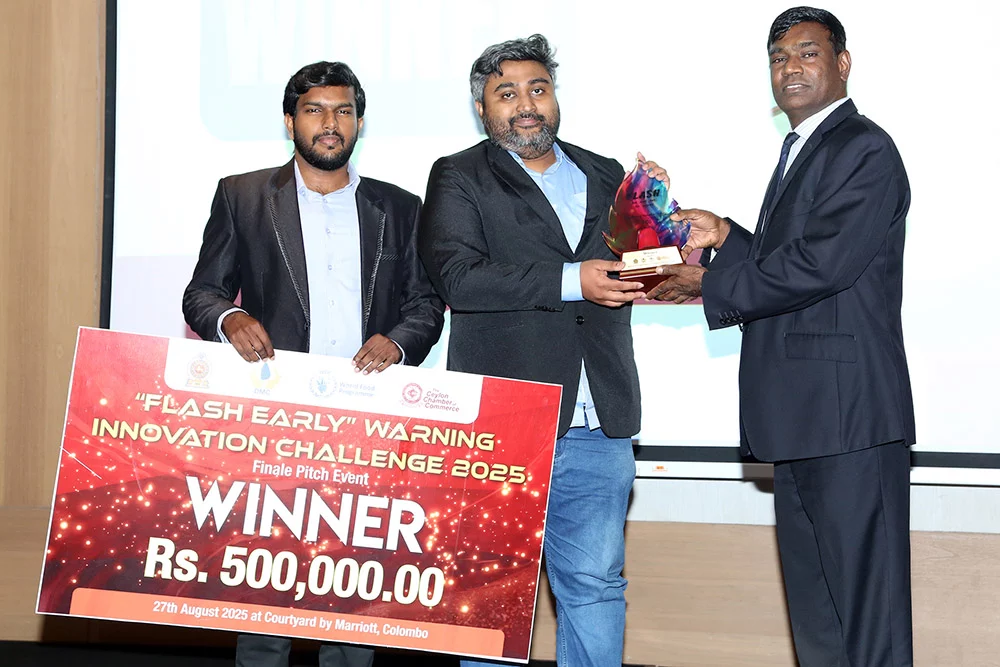
The FLASH Early Warning Innovation Challenge 2025 was launched to identify technology-driven solutions to strengthen national disaster early warning systems and to connect innovators with government and private-sector partners.
Impact
The project strengthened disaster risk awareness, business continuity planning, and climate resilience within Sri Lanka’s private sector. It built technical capacity, supported enterprises in developing practical Business Continuity Plans, and strengthened collaboration between the private sector, government, and innovators, laying a foundation for sustained engagement in disaster risk reduction and climate resilience.